Formula
5000 was a For mula
of motor racing developed in the late 1960s. In the period, which
was highlighted during the 1970s with racing in Australia, New Zealand,
North America and Europe the grids were made up of about 20 or so
cars.
mula
of motor racing developed in the late 1960s. In the period, which
was highlighted during the 1970s with racing in Australia, New Zealand,
North America and Europe the grids were made up of about 20 or so
cars.
Manufacturers
included Elfin, Lola, Begg, McCrae, Matich, Chevron, McLaren, March
and Gurney-Eagle to name a few.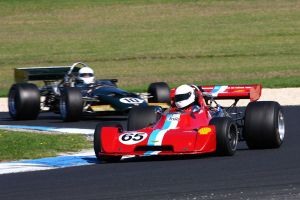
The
cars are raw racing cars, very simplistic, but very fragile. In period
many 5000s were unrelible as the power from the 5-litre engines on
such a fragile chassis left to a lot of brake-downs.
Wind
back during the past ten or so years in historic racing we have seen
the popularity, and reliably of Formula 5000 cars get stronger. Grid
numbers have now increased on a local stage, much of which can be
attributed to large attendances by New Zealanders.
We
are now regularly wi tnessing
Formula 5000 races of 35-40 cars. A time progresses more and more
of the known 60-odd 5000s in Australian garages are hitting the track.
At present, however, we have about 6-7 active Formula 5000 competitors.
tnessing
Formula 5000 races of 35-40 cars. A time progresses more and more
of the known 60-odd 5000s in Australian garages are hitting the track.
At present, however, we have about 6-7 active Formula 5000 competitors.
The
signs ahead are very positive with at least another 5-6 almost at
race ready trim.
Event
promotors are looking after the spectators by investing much time
and sponsorship into obtaining fields of Formula 5000s for key historic
motor racing events in Australia and New Zealand.
In
Australia enthusiastic spectators will see these cars at the longer,
faster tracks at the major events of Phillip Island Classic, Historic
Sandown and the biennial Tasman Revival at Eastern Creek.
In
New Zealans there's the Southern Festival of Speed and the NZ Festival
of Motor Sport.

